 About YUU日本語
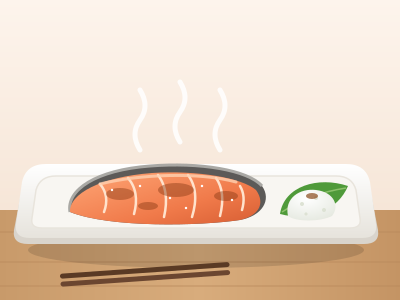
Salt-Grilled Salmon (Frying Pan Method)
Serves 2 · About 20 min (10 min of this is just letting it sit after salting)
Cooked in a frying pan instead of a fish grill. Good for breakfast or bento too.
① Salt and let sit→② Cook the presentation side first→③ Flip and cover→④ Serve
What to buy
Fish
Vegetables
Check what you already have
Tap an item to check it off (checks clear when you close the page).
How to make it
1
Salt and let sit 10 min
- Put the salmon on a plate and sprinkle salt on both sides, a little at a time (1/4–1/3 tsp in total)
- Leave it for 10 min (with "amajio" salmon, no salt and no waiting needed)
- While you wait, if using daikon, peel it, grate it, and put it in a colander to drain
- After 10 min, pat off the water on the surface with paper towels
How to tell it's doneThe water on the surface is wiped off, and it doesn't feel sticky.
2
Cook with the presentation side down
- Line the frying pan with parchment paper (if you don't have it, add 1 tsp oil)
- Lay the salmon with the side that will face up on the plate facing down, then turn on medium heat
- Don't move it while it cooks
How to tell it's doneLooking from the side, the fish has turned whitish pink (not see-through) about halfway up from the bottom, and the bottom is browned.
3
Flip it and cook with the lid on
- Gently flip with a spatula
- Cover and cook over medium-low heat
How to tell it's donePut cooking chopsticks into the thickest part and open it a little: it's whitish pink and not see-through all the way through. If any see-through orange is left, cover and cook 1–2 min more.
Be carefulIf you used oil, water drops fall and splatter when you open the lid. Lift the lid from the near side toward the far side.
4
Serve
- Put the salmon on a plate
- Add grated daikon on the side (you can add a few drops of soy sauce)
ReadyServe with rice and miso soup.
📚 Learn more about this dish
🥬 Ingredient guide
🔪 Cutting & cooking tips
If it didn't work out
It stuck to the pan and fell apartYou moved it before it browned, or used neither paper nor oil. Next time, don't touch it during step 2.
Too saltyYou added more salt to lightly salted salmon. When buying, check the label on the pack ("amajio" or "nama" (raw)).
The fish is tough and dryOvercooked. Next time, turn off the heat in step 3 as soon as the color inside has changed.
It smells fishyYou didn't pat off the water from step 1. Next time, pat it dry well with paper towels before cooking.
Was this recipe helpful?
This site is free with no ads. If you like, you can support it with a tip.
☕ Send a tip Choose how many cups. Everything stays free to read.Made by YUU, a teen who loves cooking → About me